
How do you identify quest givers in Ashes of Creation?
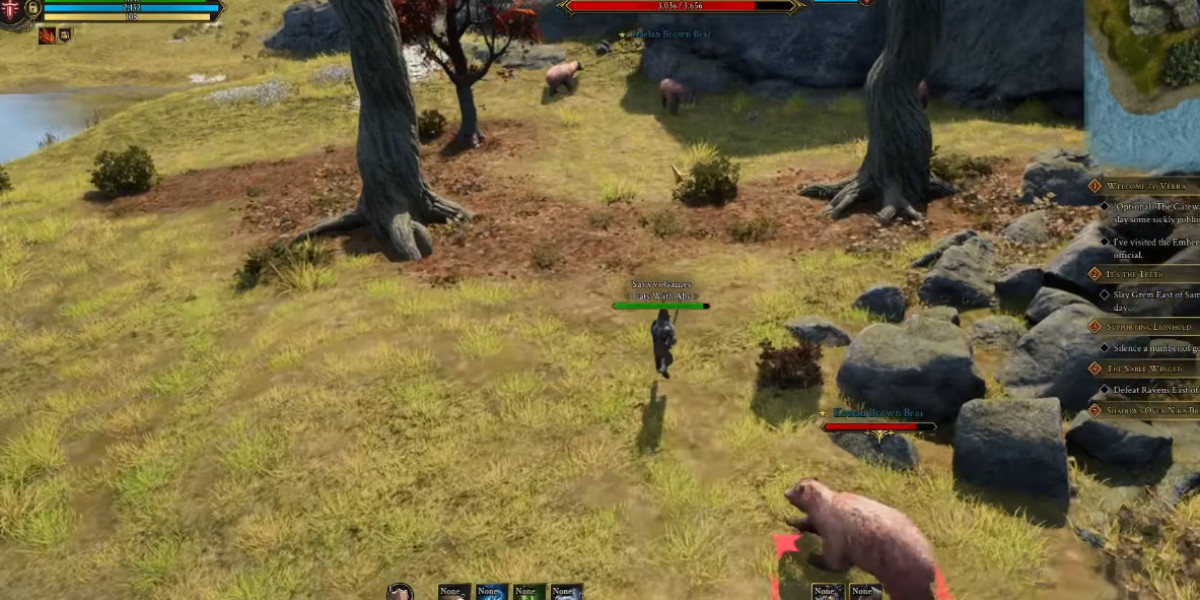
In Ashes of Creation, quest givers do not stand around with large exclamation points above their heads. Instead, the game uses more subtle visual cues.
Most players identify a quest giver by two main signs:
A book icon near the NPC’s name
A green shimmer on the NPC’s nameplate
The shimmer is not flashy. In general, you will only notice it if you are paying attention or interacting with NPCs regularly. This is intentional. The game expects players to slow down a bit and observe their surroundings rather than follow icons on a map.
Gold-colored name highlights usually indicate shop-related NPCs, not quest paths. This distinction becomes clearer the longer you play.
Why doesn’t Ashes of Creation use obvious quest markers?
Ashes of Creation avoids obvious quest markers like question marks and arrows because the developers want exploration to matter.
In most MMOs, players usually rush from marker to marker. In this game, quests are meant to feel discovered rather than assigned. Information comes from:
NPC dialogue
Environmental clues
Local events
Player conversations
Most players learn quickly that skipping dialogue often means missing context or even missing quests entirely. Usually, listening to NPCs gives hints about nearby problems, threats, or opportunities.
Where do quests usually come from?
Many quests do come from NPCs inside settlements, especially early on. However, not every quest starts in a town or village.
In practice, players find quests from:
NPCs outside settlements
Camps, roads, or ruins
Node-related activity
Events triggered by player actions
For example, a quest giver like Maho outside the Miraleth settlement shows that important NPCs can exist beyond city walls. Most players who explore just a little beyond safe areas will start noticing these quest opportunities.
Can quest givers be killed by players?
No. Quest givers cannot be killed by players.
This is a deliberate design choice. In Ashes of Creation, killing an NPC should have a meaningful reason tied to the world or story. Preventing other players from accessing content is not considered a good reason.
In general, this means:
Quest givers are protected NPCs
Players cannot grief others by removing quests
Content remains available even during conflicts
This design keeps the world stable while still allowing PvP and meaningful consequences elsewhere.
How do players usually find quests without markers?
Since there are no obvious quest markers, most players rely on habits rather than UI elements.
Common approaches include:
Talking to NPCs when entering new areas
Watching for green shimmered names
Listening for NPC dialogue that hints at problems
Following roads and points of interest
Over time, players learn that quests often connect to the environment. A damaged road, an abandoned camp, or hostile creatures nearby usually means there is a reason behind it.
In general, players who rush through areas tend to miss content, while those who explore at a steady pace find more quests naturally.
What role does NPC dialogue play in quest discovery?
Dialogue is central to questing in Ashes of Creation.
NPCs often explain situations rather than clearly stating “this is a quest.” Most players notice that quests are framed as conversations or requests, not tasks on a checklist.
Usually, NPCs will:
Describe local problems
Mention missing people or supplies
Hint at dangerous areas nearby
React to node development or player actions
Paying attention to these conversations helps players understand not just what to do, but why they are doing it.
Do quests change based on the world state?
Yes. Quest availability can change depending on node progression, player activity, and regional events.
In practice, this means:
A quest giver might offer different tasks at different times
Some quests only appear when a node reaches a certain stage
Events can temporarily create or remove quest opportunities
Most players learn that revisiting areas later can reveal new content, even if nothing was available earlier.
How does this affect player behavior?
Because quests are not clearly marked, players tend to talk to each other more. Sharing information becomes valuable.
In general, players will:
Ask others where quests were found
Exchange tips about NPC locations
Group up to explore unfamiliar regions
This system rewards curiosity rather than efficiency. Players who treat the world like a checklist usually feel lost, while those who treat it like a place to explore adapt more easily.
Is questing slower compared to other MMOs?
For many players, questing feels slower at first. That is mostly because the game does not guide you step by step.
However, once players adjust, the pacing feels more natural. You spend less time staring at maps and more time reacting to what is happening around you.
Usually, players who enjoy immersion appreciate this approach more than those looking for fast leveling routes.
How do economy and quests connect?
Quests often tie into crafting, resources, and local needs. NPCs may ask for items that are scarce in the area or related to nearby threats.
Some players also look into trading or gold-related systems as part of long-term progression. Discussions around finding a safe place to buy AoC gold U4N sometimes come up in community spaces, especially when players compare different progression paths. However, most quest-related gold comes naturally from gameplay rather than external sources.
quest givers in Ashes of Creation
Quest givers in Ashes of Creation are designed to feel like part of the world, not tools pointing you forward.
Most players eventually realize that:
Visual cues are subtle but consistent
Dialogue matters more than UI
Exploration leads to better rewards
Content is rarely handed to you directly
If you approach questing with patience and curiosity, the system starts to make sense. In general, Ashes of Creation rewards players who pay attention, take their time, and engage with the world as it unfolds.