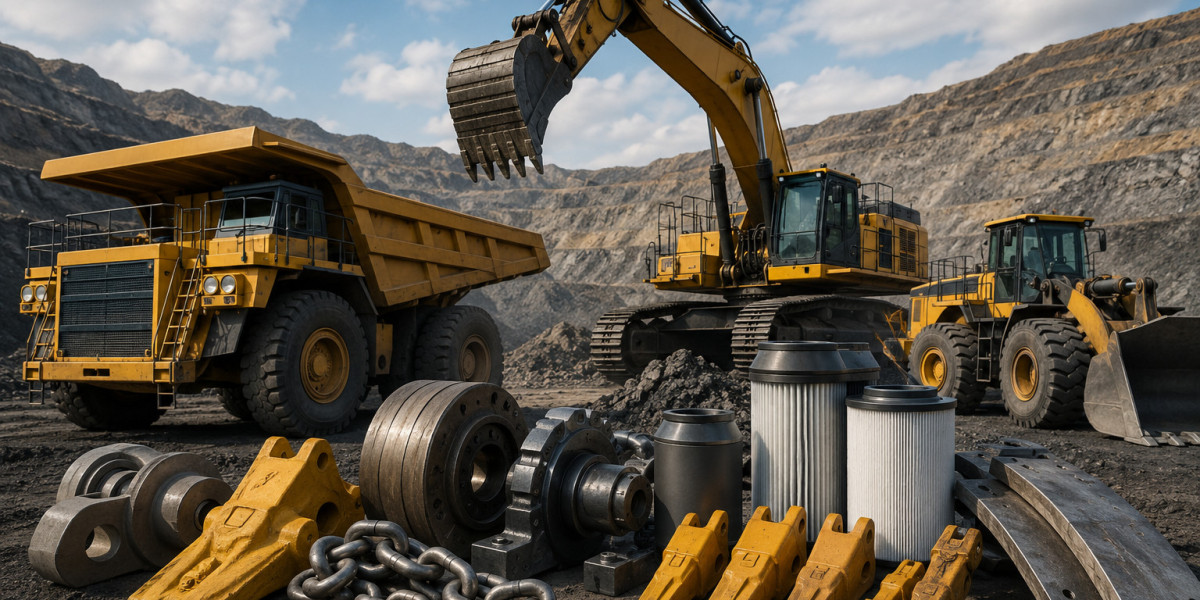

Unplanned downtime is one of the most expensive problems in mining operations. When a critical machine stops working and the right part isn't on hand, every hour of delay translates directly into lost production and revenue. A well-planned parts inventory strategy can prevent this — and working with a reliable mining equipment supply company is often the key to making it work.
This guide breaks down how to build a parts inventory strategy that keeps your equipment running and your operation on schedule.
Why Parts Inventory Planning Matters in Mining
Mining equipment operates in harsh, high-stress environments. Crushers, conveyors, drills, and haul trucks are under constant mechanical strain. Even with regular maintenance, parts wear out — often at unpredictable times.
The cost of not being prepared includes:
Extended downtime while waiting for parts to be sourced and shipped
Emergency freight charges that can significantly inflate part costs
Production losses that ripple across the entire operation
Safety risks when operators push damaged equipment to avoid halting work
A proactive parts inventory strategy shifts your operation from reactive firefighting to planned, controlled maintenance.
Step 1: Classify Your Equipment by Criticality
Not every machine on site deserves the same inventory attention. Start by categorizing your equipment based on how much impact a failure would have on production.
Three common criticality tiers:
Tier 1 – Critical: Equipment whose failure immediately halts production (e.g., primary crushers, main conveyors, hoisting systems)
Tier 2 – Important: Equipment that affects throughput but has some workaround capacity
Tier 3 – Support: Equipment failures that can be tolerated for a short period without major production impact
Once you have this classification, allocate your stocking efforts accordingly. Tier 1 equipment should always have essential wear parts and common failure components on hand.
Step 2: Identify High-Wear and Long-Lead-Time Parts
For each piece of critical equipment, work through two key categories:
High-wear parts are components that degrade predictably with use — conveyor belts, crusher liners, drill bits, hydraulic seals, and filters. These should be stocked in quantities that match your typical replacement cycles.
Long-lead-time parts are components that take weeks or months to procure — large bearings, custom fabricated parts, motors, and gearboxes. Even if they fail rarely, the procurement delay alone justifies keeping at least one unit on-site or on order.
Coordinating with your mining equipment supply company early helps you understand lead times and plan buffer stock accordingly.
Step 3: Set Minimum Stock Levels and Reorder Points
Once you know what to stock, establish clear thresholds that trigger restocking before you run out.
Key metrics to define:
Minimum stock level: The lowest acceptable quantity before a reorder must be placed
Reorder point: The quantity at which you initiate a purchase, accounting for lead time
Safety stock: A small buffer above minimum levels to absorb unexpected demand spikes
For example, if a hydraulic seal takes two weeks to deliver and you typically use three per month, your reorder point should account for that usage during the lead time window — plus a safety buffer.
Step 4: Choose the Right Stocking Model
There's no single right approach to stocking mining equipment parts. The right model depends on your operation's size, location, and budget.
Common approaches:
On-site inventory: Maximum control and fastest access, but requires storage space and capital tied up in stock
Vendor-managed inventory (VMI): Your mining equipment supply company manages and replenishes stock on your behalf, often with consignment arrangements
Hub-and-spoke model: A regional distribution hub holds inventory that can be delivered quickly to multiple sites
Hybrid approach: Critical parts stocked on-site; less urgent items sourced from a nearby supplier on demand
Remote mining operations often benefit most from VMI or hybrid models, where logistics constraints make waiting for standard delivery impractical.
Step 5: Build a Strong Supplier Relationship
Your inventory strategy is only as reliable as the supplier behind it. A dependable mining equipment supply company can offer more than just parts — they can become a strategic partner in your maintenance planning.
What to look for in a supplier partnership:
Parts availability and depth of catalogue for your specific equipment brands and models
Reliable lead times with clear communication when delays arise
Technical support to help identify the right part and avoid costly mismatches
Emergency supply capability for unplanned breakdowns
Flexible stocking arrangements such as consignment or blanket purchase orders
Establishing a preferred supplier relationship means faster service, better pricing leverage, and a partner who understands your equipment history.
Step 6: Use Data to Continuously Improve
Parts inventory management isn't a one-time exercise. It improves over time when you track the right information.
Monitor these data points regularly:
Part consumption rates versus your initial estimates
Stockout incidents — how often you ran out of a part and the cost of that gap
Excess inventory — parts you're holding that haven't moved in 12+ months
Supplier lead time performance versus promised timelines
Review this data quarterly and adjust your minimum levels, reorder points, and supplier agreements accordingly. Over time, your inventory strategy becomes leaner and more accurate.
Practical Example: Conveyor System Parts Planning
A surface mining operation running three conveyor lines might stock the following for each line:
Belting: One full roll of replacement belt stored on-site
Idlers and rollers: 10–15% of the total idler count per line as spares
Drive components: One spare gearbox and motor per conveyor drive
Sensors and controls: Common proximity switches and speed sensors
This level of on-site readiness means most failures can be addressed within hours rather than days.
Conclusion
Building a reliable mining equipment parts inventory strategy comes down to knowing your equipment, understanding your risks, and working with the right partners. By classifying equipment by criticality, identifying wear and long-lead-time parts, setting clear stock thresholds, and maintaining a strong relationship with a trusted mining equipment supply company, operations can significantly reduce unplanned downtime and its associated costs.
The goal isn't to stock everything — it's to stock the right things, in the right quantities, with the right supplier support behind you. That combination is what protects uptime when it matters most.