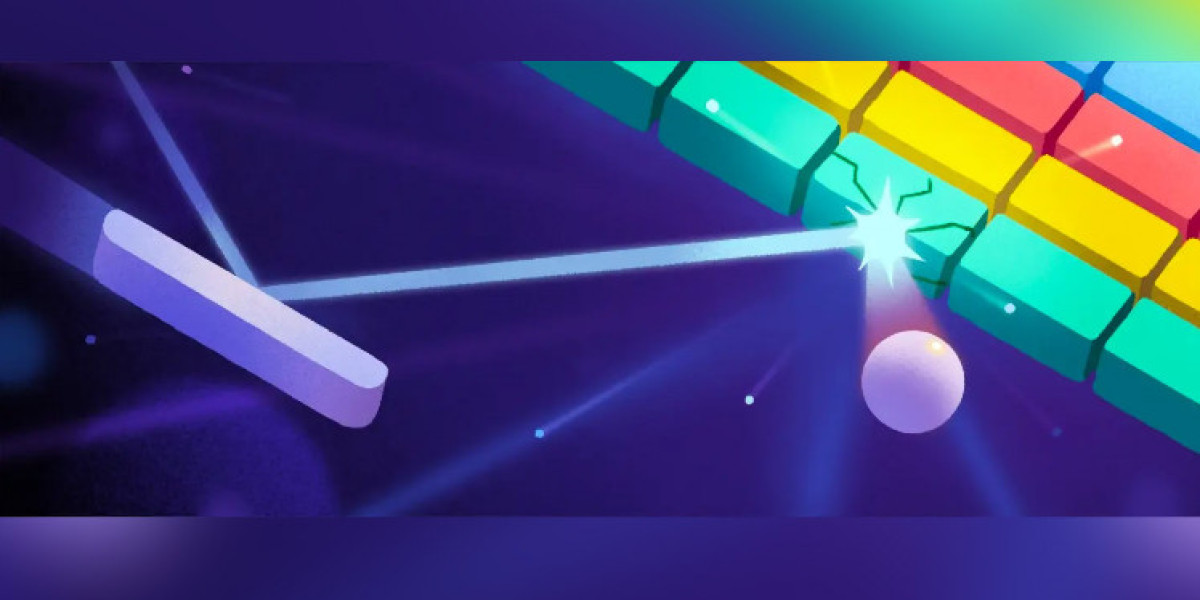

There is a peculiar silence that falls over a room when the multi-ball power-up activates. Suddenly, one bouncing orb becomes three, then five. The screen, once a neat grid of colorful blocks, erupts into controlled chaos. For the uninitiated, this is just a fleeting moment of panic. For those chasing the google block breaker high score, this is the moment the game truly begins.
Google Block Breaker is far more than a nostalgic nod to the 1976 Atari classic Breakout. It is a masterclass in minimalist game design, hidden in plain sight within your browser. While many players swipe it open for a thirty-second distraction, a dedicated subculture of players has discovered that beneath its simple exterior lies a game of deep geometry, split-second resource management, and psychological endurance .
To merely play this game is fun. To master it—to etch your name onto an unofficial leaderboard—requires a complete rewiring of how you see the paddle, the ball, and the blocks themselves.
The Misconception of the Reflex Game
The most common mistake novice players make is treating Google Block Breaker as a pure test of reaction speed. They stare at the ball, chase it frantically, and wonder why their score stalls by level five or six.
Precision over speed is the first law of the high score. Moving the paddle in short, deliberate taps rather than sweeping gestures drastically reduces the risk of overcorrection. Elite players rarely look at the ball itself; they look at the trajectory line between the ball and the paddle, anticipating the bounce point before the ball arrives .
This is where the "center catch" technique becomes essential. By catching the ball with the exact center of the paddle, the ball returns at a perfect 90-degree angle—straight up. This predictable trajectory allows you to surgically target specific columns of blocks rather than relying on random ricochets . It feels slower, but it clears levels faster.
The Economics of Power-Ups
In the economy of the google block breaker high score, power-ups are your currency. However, hoarding them or using them immediately are both losing strategies.
The Multi-Ball is the most misunderstood asset in the game. Beginners see extra balls as extra chances. Experts see them as a scoring multiplier that must be contained. When multiple balls flood the screen, panic often leads to a quick death. The trick is to identify the "lead ball"—usually the one with the most stable trajectory—and focus exclusively on keeping it alive. The other balls, left to bounce wildly, will clear peripheral blocks without any additional effort from the player .
Similarly, the Laser power-up should never be wasted on easily accessible bricks. Its true value lies in dealing with "unbreakable" or multi-hit blocks located in the treacherous upper corners of the screen—areas the ball rarely reaches at a usable angle .
The Paddle Expansion should be held in reserve like an insurance policy. Activate it not when you are comfortable, but specifically when the ball speed has exceeded your natural reflex threshold, effectively buying yourself a larger margin of error .
Reading the Language of the Blocks
Google Block Breaker speaks to the player through the arrangement of its blocks. Achieving a google block breaker high score requires fluency in this visual language.
Not all blocks are enemies to be destroyed; some are resources to be farmed. The ♡ (Heart) block does not grant an extra life immediately. It requires four bounces on the paddle before the health is awarded. Skilled players recognize this block immediately and deliberately slow the game down, tapping the heart block gently to rack up the bounces without risking the ball flying into the void .
Conversely, certain decorated blocks act as traps, dropping obstacles that slow the paddle upon contact. Awareness of these hazards allows players to position themselves away from the drop zone the moment the block shatters .
The Endless Level Mindset
Structurally, Google Block Breaker is an infinite game. There is no final boss, no credits roll. The game only ends when you run out of lives. This existential structure requires a shift in psychology.
To achieve a record-setting score, you cannot play to win. You must play to survive.
This is why the Ball Slow power-up is often ranked by pros as the most valuable in the game. It does not add flashy lasers or multiple orbs. It simply gives you time. In later stages, when the base speed of the ball is so fast it appears as a flickering blur, the Slow power-up resets the pace, allowing the player to re-establish control and breathe .
The Myth of the "World Record"
It is important to note that Google has not officially released a global leaderboard for Block Breaker. This has created a fascinating Wild West environment for competitive players. The "google block breaker high score" is a living, contested legend.
Unofficial records circulating in gaming communities suggest that expert players frequently reach scores in the millions. These aren't achieved through supernatural reflexes, but through "looping"—trapping the ball in the upper third of the playfield by striking the blocks at extreme horizontal angles, allowing the ball to bounce rapidly between the ceiling and the top of the block formations for extended point bursts .
The Tactical Breakdown
For those ready to move past casual play, here is a consolidated strategy checklist used by high-score chasers:
1. The Opening Salvo:
Do not immediately launch the ball. Observe the block layout. Identify the 〇 (Circle) blocks (which release extra balls) and the + (Plus) blocks (which release random power-ups). Your first objective is to breach the formation to reach these specific targets .
2. Zone Defense:
Resist the urge to bounce the ball wildly. Keep it contained on one side of the screen to systematically eliminate blocks, reducing the chaos before moving to the next sector .
3. The Soft Touch:
When the ball is moving slowly, practice "dinking"—gently tapping the ball with the very edge of the paddle. This creates razor-thin angles that can shave off single rows of blocks without disrupting the rest of the formation .
4. Life Management:
A single life must often carry you through multiple levels. If the screen is nearly clear but the ball is in a dangerous position, do not take the risky shot. Wait for the ball to settle into a safe vertical drop. Patience preserves lives; lives extend score runs .
Why We Play
Google Block Breaker persists not because it is complex, but because it is pure. In an era of games demanding hundreds of gigabytes of storage and dozens of hours of commitment, this Easter egg asks only for a search bar and a moment of focus.
Yet within that simplicity lies infinite depth. The pursuit of the google block breaker high score is a pursuit of order within chaos. It is the human desire to impose structure on randomness, to find the predictable angle in an unpredictable bounce.
The paddle is an extension of the will. The ball is the about relentless passage of time. The blocks are the obstacles we choose to break, one by one, in the hope that when the screen clears, we will be ready for what comes next.
So the next time you open a new tab and feel the urge to take a break, remember: you aren’t just killing time. You are training your focus. You are learning geometry. You are chasing a ghost of a record that may or may not exist.
And if the ball starts to fall? Center catch. Breathe. Aim.